
Welcome to the new Igloo Records website
IGLOO, An Identity in Motion
Founded in 1978, the Igloo Records label emerged in a moment of rare cultural effervescence. In the late 1970s, Belgium witnessed the rise of a constellation of networks, associations, and alternative projects that profoundly reshaped the cultural landscape. Within this ferment, Igloo established itself as a space for freedom, research, and experimentation—actively contributing to the development and structuring of jazz in Belgium, while remaining open to the most singular musical forms.
From the outset, the label embraced productions outside dominant circuits: sound poetry, improvised music, and unclassifiable propositions. The intent was already clear—to give a voice to what does not fit into predefined boxes. The merger with the LDH label in the early 1980s marked a decisive turning point.
Igloo then became home to major jazz figures such as Chet Baker, Philip Catherine, Jacques Pelzer, Michel Herr, Steve Houben, and Charles Loos—artists who helped establish the label’s reputation far beyond Belgium’s borders.
But beyond a prestigious catalogue, Igloo has built a vision: to be a platform for the talents of tomorrow. This ambition has taken shape over the decades through the emergence and support of several generations of artists—from Nathalie Loriers to Eric Legnini, from Ivan Paduart to Manuel Hermia, then Mélanie de Biasio, Greg Houben, Pascal Mohy, and more recent figures such as Igor Gehenot, Antoine Pierre, and Jean-Paul Estiévenart. Igloo has accompanied the transformations of jazz without ever betraying its essence.
Diversity as a Compass
This taste for transversality—for the margins and hybrid zones—lies at the heart of the label’s DNA. And it is precisely this richness that Igloo has sought to make more legible and accessible, without ever simplifying it.
From the very beginning, Igloo’s philosophy has rested on a strong conviction: to foster musical diversity in a context threatened by standardization. While jazz has become its main territory, the label has never stopped listening to other forms of expression.
This openness has materialized through specific projects and collections. Igloo+ welcomed more experimental and unclassifiable creations. Igloo Mondo, launched in the late 1990s, explored cultural encounters and the crossing of languages. Francophone song also holds a special place: following the adventure of the Franc’Amour label in the 1980s, Igloo developed Factice, dedicated to a contemporary and distinctive Francophone expression.
A Redesign as Natural Continuity
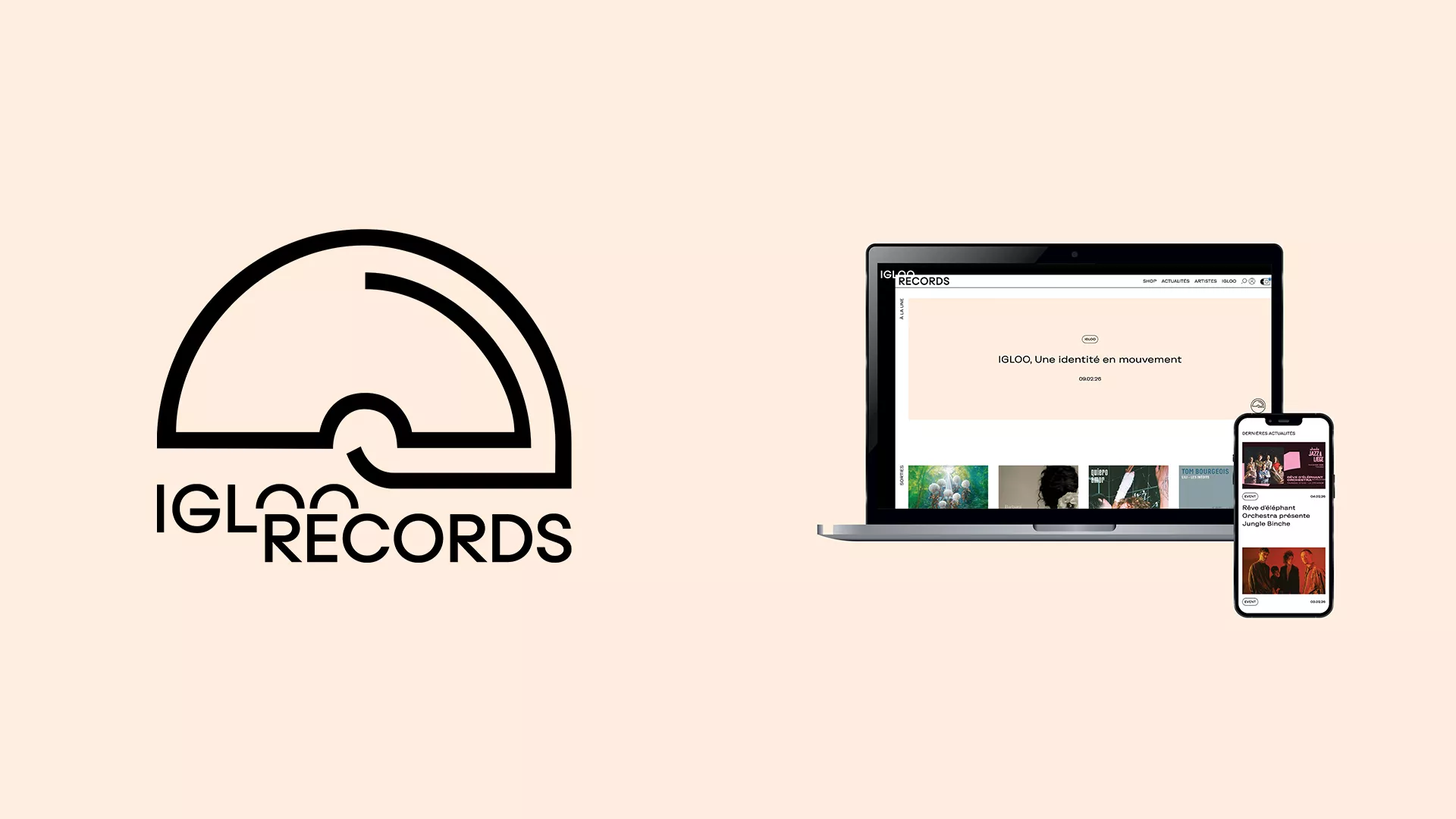
The complete overhaul of Igloo’s visual and digital identity follows this logic of continuity rather than rupture. It is not about reinventing the label, but about realigning form with substance—equipping Igloo with tools worthy of its history, its catalogue, and its current ambitions.
The new website, conceived by Takeshape Studio and developed by Bien à Vous, has been designed as a true editorial platform. Clearer and more fluid, it allows users to navigate nearly fifty years of productions without losing the complexity or depth of the catalogue.
A Refined and Assertive Graphic Identity
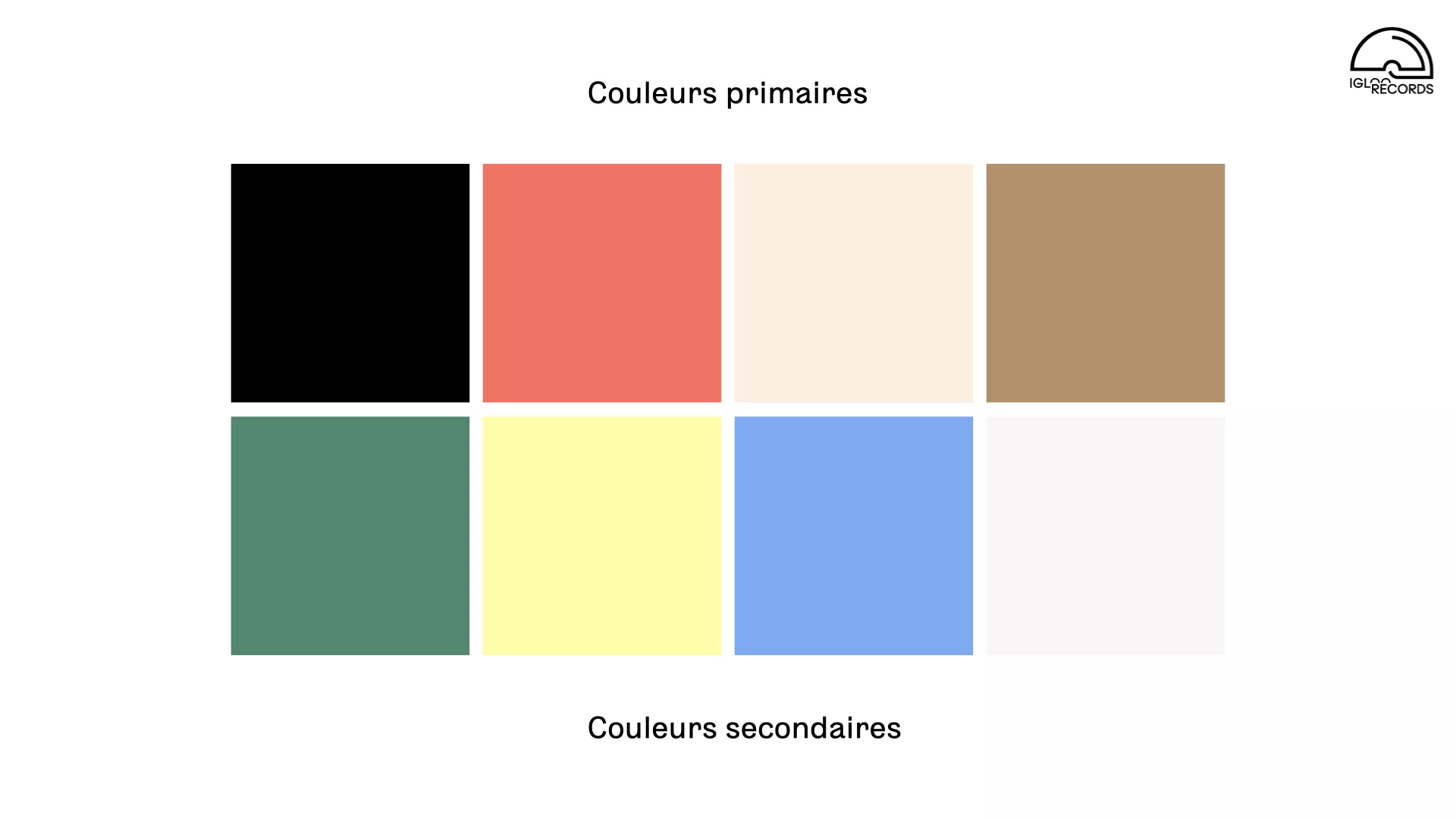
The new color palette plays with bold, deliberate contrasts. Sober, structuring primary colors—deep black, warm red, and light tones—are complemented by more organic and vibrant secondary hues. A balance between rigor and sensitivity, between heritage and movement.
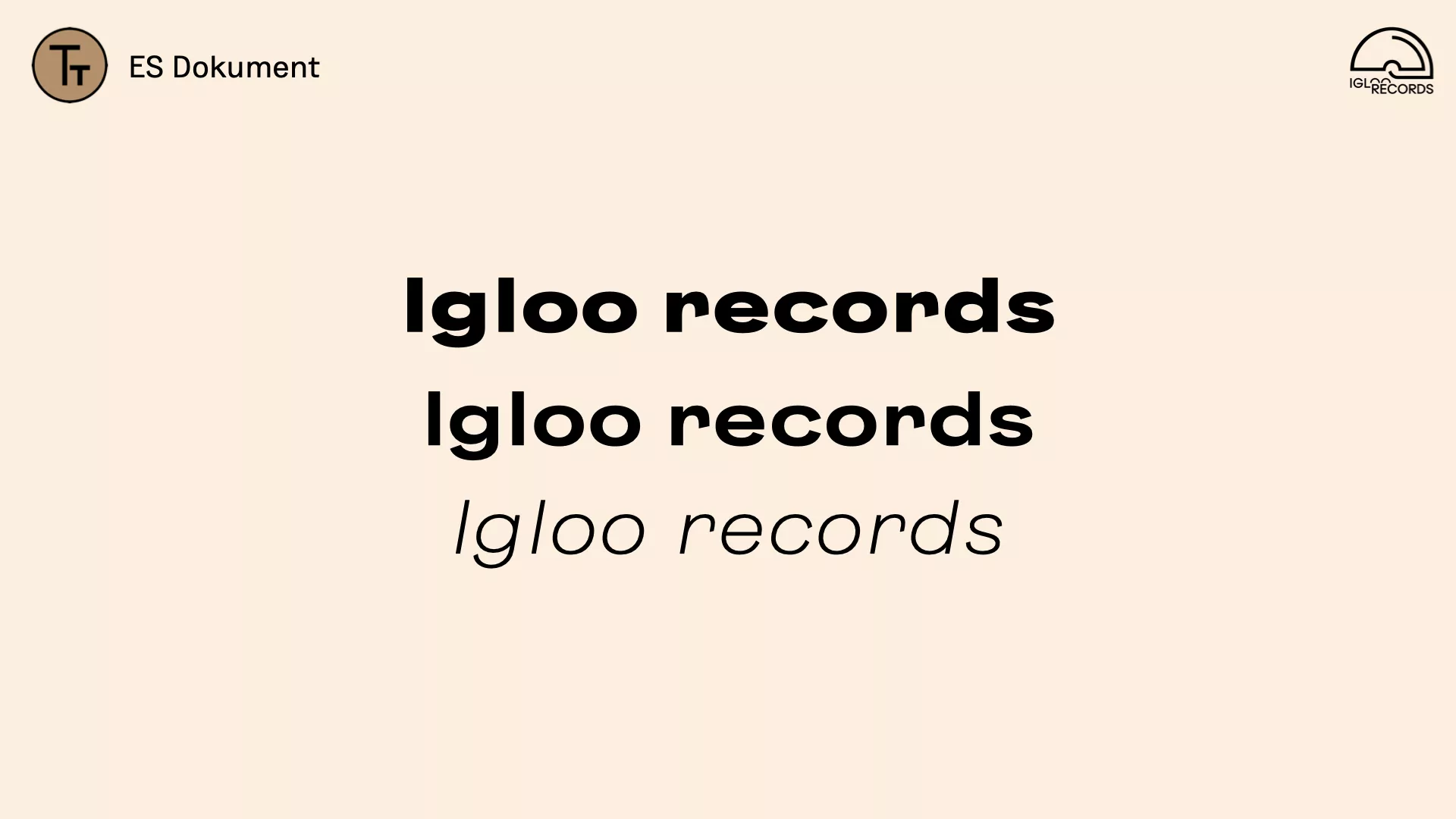
The logo has been modernized and streamlined, built around a new typographic pairing: US Dokument and ES Build. Robust, contemporary typefaces that engage in dialogue with the label’s history while firmly anchoring it in the present.
An E-shop Designed for Listeners
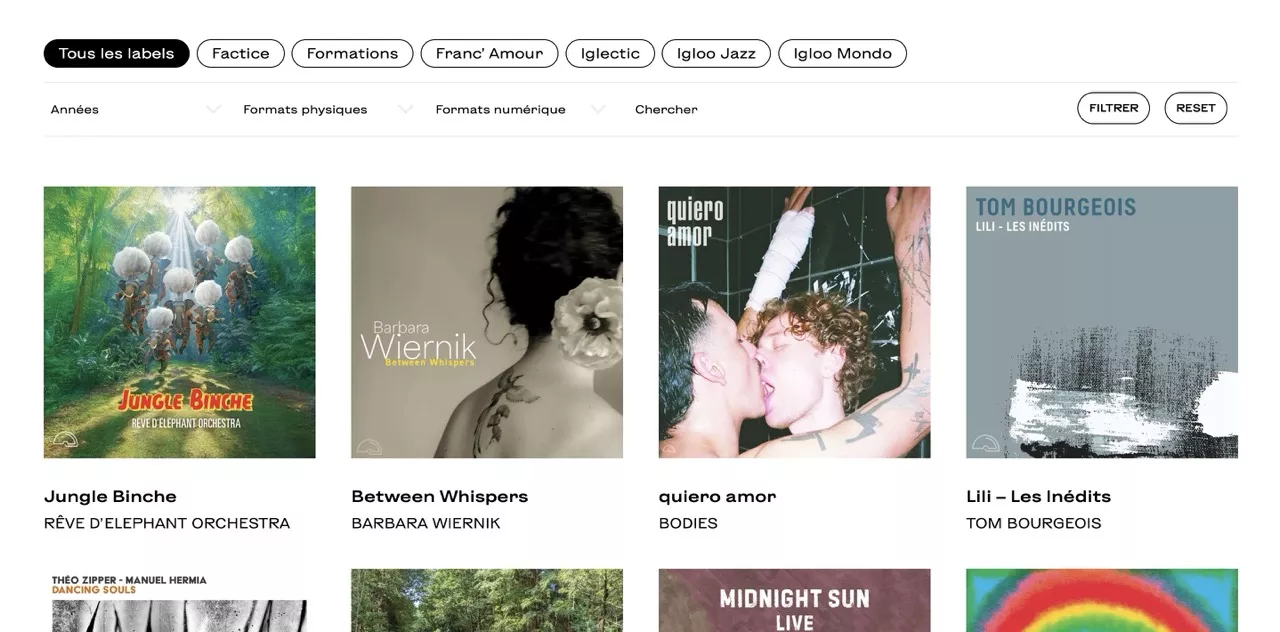
More than a store, it is now a tool for discovery. Inspired by the navigation logic of platforms such as Bandcamp or Discogs, the user journey has been entirely rethought, with filters by genre, instruments, years, and formats. The catalogue becomes legible, exploratory, almost playful—inviting listeners to dig, compare, and connect.
A Living Label, Open to the World
This new identity is accompanied by a strengthened editorial dimension. A News section will regularly enrich the site, highlighting releases, concerts, and projects by Igloo artists, as well as the broader Belgian jazz scene.
On social media, the artistic direction aligns with this new identity through the launch of original formats: OK Jazz!, record recommendations by label artists, filmed interviews—content designed to transmit, contextualize, and share.
The newsletter, also entirely redesigned, becomes a space for reading and discovery in its own right, extending the website experience into a more intimate and direct format.
Igloo, Yesterday and Tomorrow
Nearly half a century after its creation, Igloo continues to defend a certain idea of music—demanding, curious, and open. This new identity does not signal a change of course, but an affirmation: that of a label that looks at its history with clarity, and at the future with enthusiasm.
Igloo moves forward, faithful to what has always driven it—to give time, space, and a voice to those shaping the music of today and tomorrow.